

The modern B2B buyer has changed the game. Before your sales team ever gets a chance to send a “first touch” email, your prospects are already deep into their research. A 2024 buyer study from Demand Gen Report found that 81% of buyers already have a preferred vendor at first contact. This means your brand must “pre-sell” long before a discovery call.
Compounding this challenge, independent research from equinetmedia.com points to longer B2B cycles overall, with one study pegging the journey at approximately 379 days from initial research to a closed deal. If buyers are making decisions anonymously and the path to purchase is getting longer, how can GTM teams compete? The answer is by using branding to shorten B2B sales cycles.
It’s not about logos and colors; it’s about strategically building a system of “instant credibility” that removes friction and compresses the time it takes for a buyer to trust you. Here is a practical playbook for building that system.
Website: Make Trust the Above-the-Fold Default
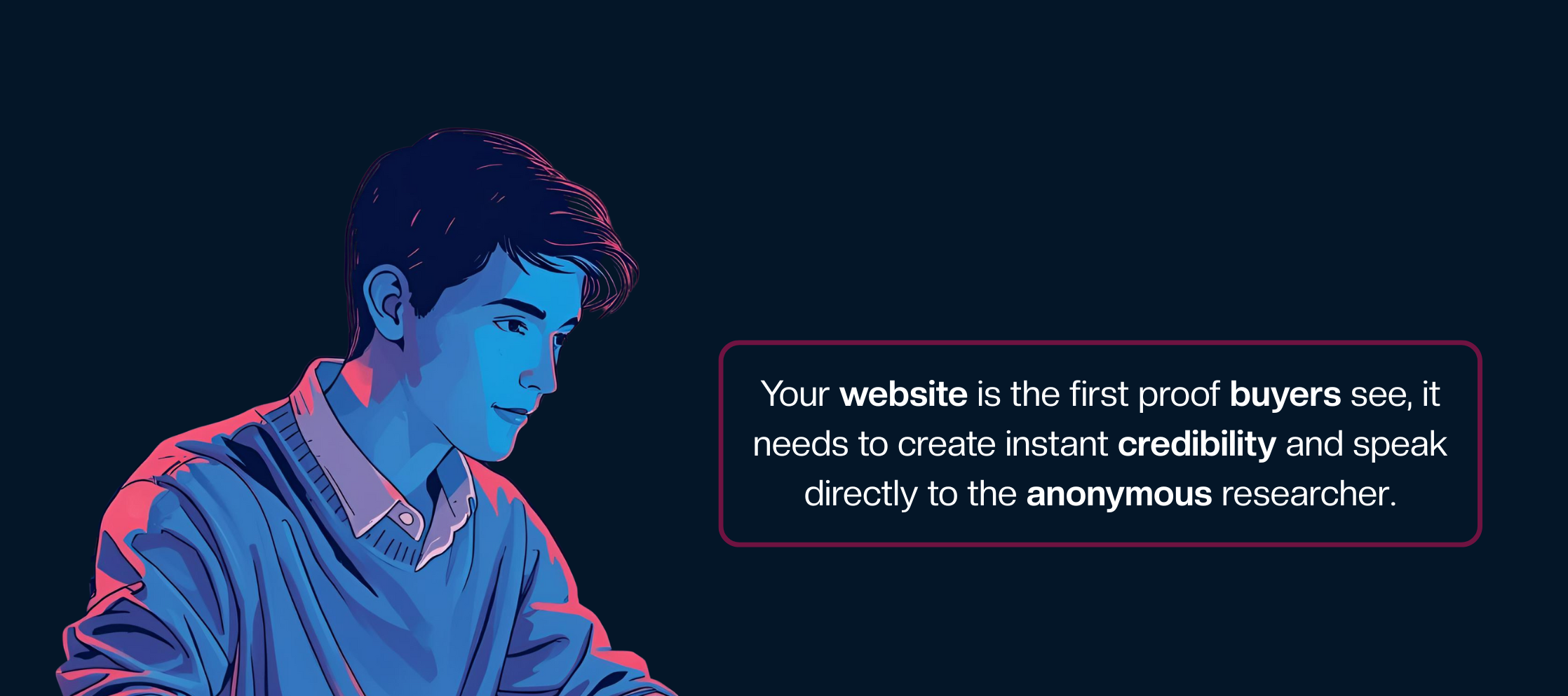
Your website is the first proof point buyers encounter. It must be built for “instant credibility” to serve the anonymous researcher.
- Above the Fold: This space is sacred. It needs a one-sentence value proposition, 2–3 social-proof logos from recognizable customers, a primary action (like “Get a Demo”), and a secondary action (like “See Case Studies”).
- Trust Strip: Every single page should feature a “trust strip” with badges (ISO/SOC2), media mentions, marketplace logos, and review counts (e.g., “1,132 verified reviews on G2”).
- Review Syndication: Don’t make buyers leave your site to find proof. Embed live G2/Clutch widgets directly on your pages. G2’s marketplace reached over 100 million software buyers in 2024; bring that social proof home.
Why it shortens cycles: Buyers can progress far on their own. Placing verified proof and clear next steps everywhere reduces back-and-forth and speeds up qualification.
Case Studies: Outcome-First, Skimmable, and Verifiable
Case studies are a critical tool for your internal champion. According to Brixon Group, approximately 73% of B2B decision-makers say case studies significantly influence their purchases.
- Format: Start with a “Hero Bar” that clearly lists the customer, context, and a hard numeric outcome (e.g., “-37% cycle time,” “+28% win rate”).
- Structure: Keep it to three simple chapters: “The Spark” (the problem), “The Shift” (your approach), and “The Stakes” (the quantified results).
- Receipts: Include screenshots, dashboard snippets, or CFO-validated math. Link to public reviews for corroboration.
Why it shortens cycles: You are arming your champion. Tight, number-led stories give them the artifacts they need to win internal consensus and cut down on evaluation time.
Company Page & Employee Socials: Algorithmic Trust at Scale
Buyers vet your credibility on social media, especially LinkedIn.
- Company Page: Treat your LinkedIn company page as a mini newsroom, not a bulletin board. Post weekly proof: customer clips, “before/after” metrics, product explainer GIFs, and hiring wins (which signal stability).
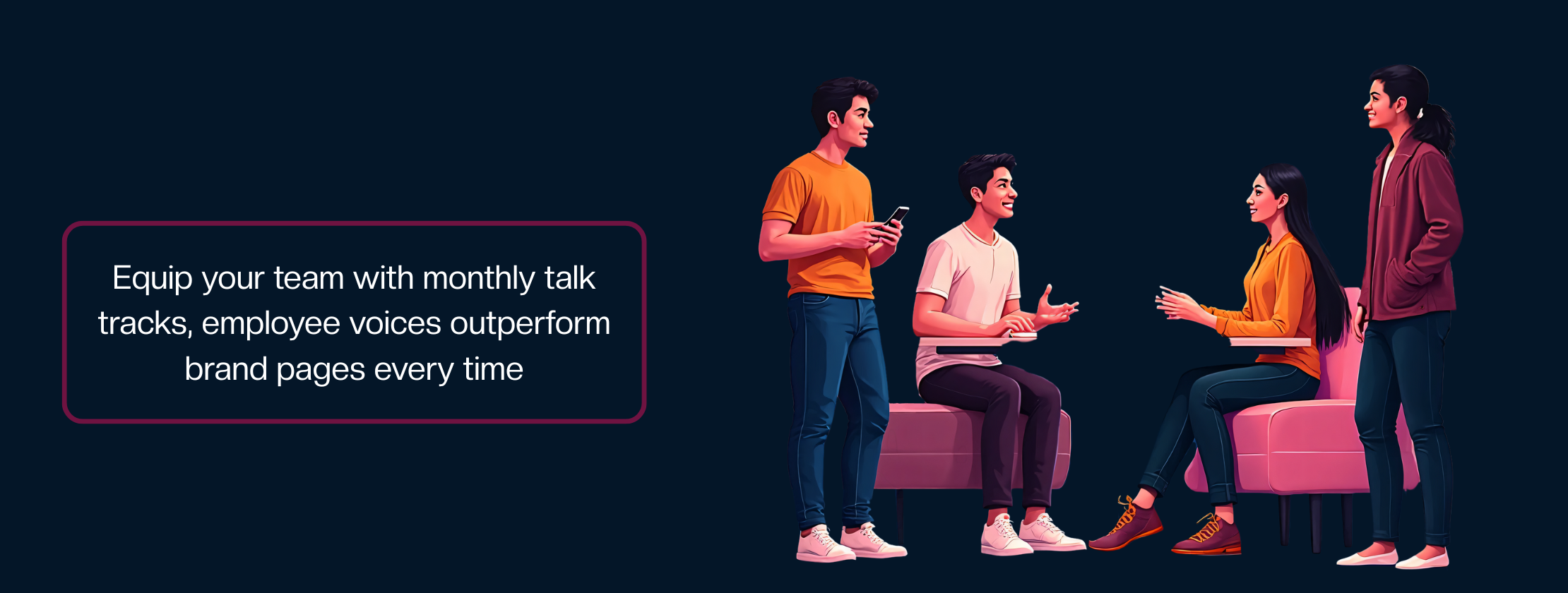
- Employee Socials: This is where employee advocacy on LinkedIn becomes a powerful lever. Your people will always outperform your brand handle. As DSMN8 research indicates, employee content earns significantly higher engagement. Provide your sellers, PMs, and CS teams with monthly “talk tracks” and encourage proof-led posts.
Why it shortens cycles: Employee networks expose your brand to entire buyer committees and peers earlier, creating a “warm familiarity” long before outreach ever begins.
Reviews Where Buyers Actually Check: G2, Clutch, Glassdoor, and Google
Third-party proof is non-negotiable. Building G2 and Clutch reviews for B2B trust is a core task.
- G2 (SaaS/Software): G2 Learn Hub data shows reviews are essential buyer proof. Use your category badges, comparison grids, and intent signals to prioritize accounts already researching you.
- Clutch (Agencies/Services): Build detailed, vertical-tagged case reviews that map directly to your ideal use cases.
- Glassdoor (Employer Brand): Buyers look here too. A strong employer profile reduces perceived delivery risk. It answers the question, “Will this team be able to execute?”
- Google Maps (Local/Service): For regional buyers, review volume and rating correlate with higher visibility and conversion, according to SOCi.
Why it shortens cycles: Verified, third-party proof dramatically reduces due-diligence time and lowers internal resistance from a buyer’s procurement or security teams.
Connect the Dots: Consistency and Measurement
Branding only shortens cycles when every surface tells the same, consistent story. Your website headlines, case study outcomes, review keywords, and employee posts must all reinforce the same 3–4 proof statements (e.g., “deploys in 14 days,” “pays back in 90,” “ISO 27001 compliant”).
You must also measure your impact.
- Direct Metrics: Track sales cycle length (first touch to closed-won), time in stage, and win rate.
- Proxy Metrics: Monitor the percentage of inbound leads who mention a review, MQL-to-SQL velocity, review volume, and branded search traffic.
- Attribution Clues: Look for G2 intent spikes that precede pipeline creation (Dreamdata).

Your 30-Day “Shorten the Cycle” Checklist
- Week 1 – Website & Evidence: Add an above-the-fold trust block (logos + review counts). Refresh two outcome-led case studies with verifiable numbers.
- Week 2 – Reviews Engine: Implement review asks into your CS workflows and project close-outs. Split your targets across G2, Clutch, and Google. Embed live review widgets on your top-traffic pages.
- Week 3 – Company & Employee Social: Ship a 30-day employee advocacy kit (4 post outlines, 8 image cards). Pin a “Start here” post on your LinkedIn company page.
- Week 4 – Measurement & Iteration: Stand up a simple review and intent dashboard. Compare your cycle metrics pre- and post-push, and double down on what works.
Branding doesn’t just look good—it actively removes evaluation friction. When you put verified proof everywhere, ship number-led case studies, and mobilize your employees, you meet buyers where they research. You arrive as the default choice and, most importantly, you shorten the path to “yes.”