

The B2B SaaS landscape has shifted. The days when a generic cold email sequence could reliably fill a pipeline are fading. Decision-makers are inundated with automated pitches, and spam filters are more aggressive than ever.
In this noisy environment, the most successful sales teams are pivoting to a strategy that combines the reach of media with the precision of sales: personal LinkedIn content for outbound sales.
It is no longer enough to have a polished company page. The data is clear: trust is built person-to-person. This article explores the hard metrics and real-world case studies proving that when sales representatives build a personal brand, they don’t just get “likes”—they book meetings and close deals.
The Data: Why LinkedIn Outperforms Cold Email
For years, sales leaders have debated the ROI of social selling. Is it just vanity metrics, or does it drive revenue? Recent studies have put this debate to rest.
When analyzing LinkedIn outbound sales metrics, the platform consistently outperforms traditional channels. According to an analysis of over 70,000 campaigns by Expandi, cold LinkedIn messages achieve an average reply rate of roughly 10.3%, nearly double the 5.1% average for cold emails.
The impact becomes even more drastic when the salesperson is active on the platform. A 2025 survey by Letterdrop revealed that sales reps who regularly share content and engage on LinkedIn report significantly higher response rates. While the industry average for cold email hovers between 3–5%, reps who “warm up” prospects through content engagement can achieve reply rates as high as 30%.
This creates a compounding effect. Prospects who recognize a salesperson’s face from a helpful post in their feed are no longer receiving a “cold” message—they are receiving a message from a known entity. This familiarity is the antidote to the low conversion rates plaguing the SaaS industry.
Real-World Success: $3.4M ARR with Two Reps
The theory of social selling is supported by undeniable case studies. The most compelling examples come from teams that treat content as a top-of-funnel engine rather than an afterthought.
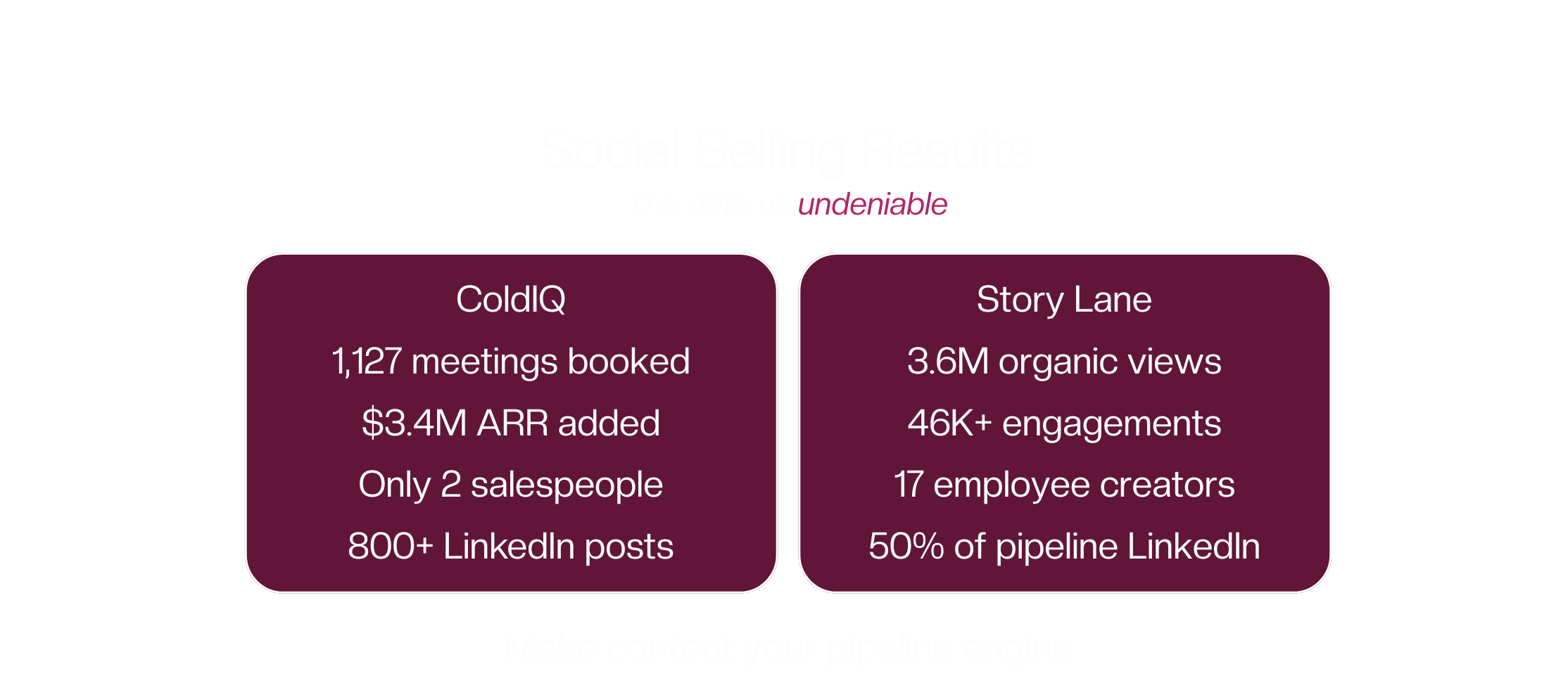
Take ColdIQ, an outbound sales technology firm. In 2024, their CEO, Michel Lieben, revealed that their team booked 1,127 sales meetings and added ~$3.4M in ARR with a sales team of just two people. How? They published over 800 LinkedIn posts focused on buyer pain points. By tracking who engaged with this content, they identified warm leads and routed them into targeted sequences. This content-first approach turned every post into a lead magnet, proving that a lean team can outperform a massive call center if the strategy is right.
Similarly, Storylane, a demo software SaaS, shifted its focus from corporate marketing to employee advocacy. By encouraging 17 employees to post consistently, they generated 3.6 million views and over 46,000 engagements. The result was staggering: over 50% of their entire sales pipeline is now attributed to LinkedIn interactions. They found that personal profiles vastly outperformed the company page because, fundamentally, people buy from people, not logos.
The Social Selling Impact on Pipeline
Consistency on LinkedIn does more than just get a reply; it accelerates the deal cycle. Data from LinkedIn shows that sales reps with high Social Selling Index (SSI) scores—achieved through networking and content sharing—produce 45% more opportunities and are 51% more likely to hit quota than their peers.
The social selling impact on pipeline is measurable in both volume and quality. Martal Group reports that social outreach now drives approximately 20% of their total pipeline. Furthermore, multi-touch campaigns that combine LinkedIn activity (like profile views or comments) with direct messaging see reply rates jump to nearly 17%.
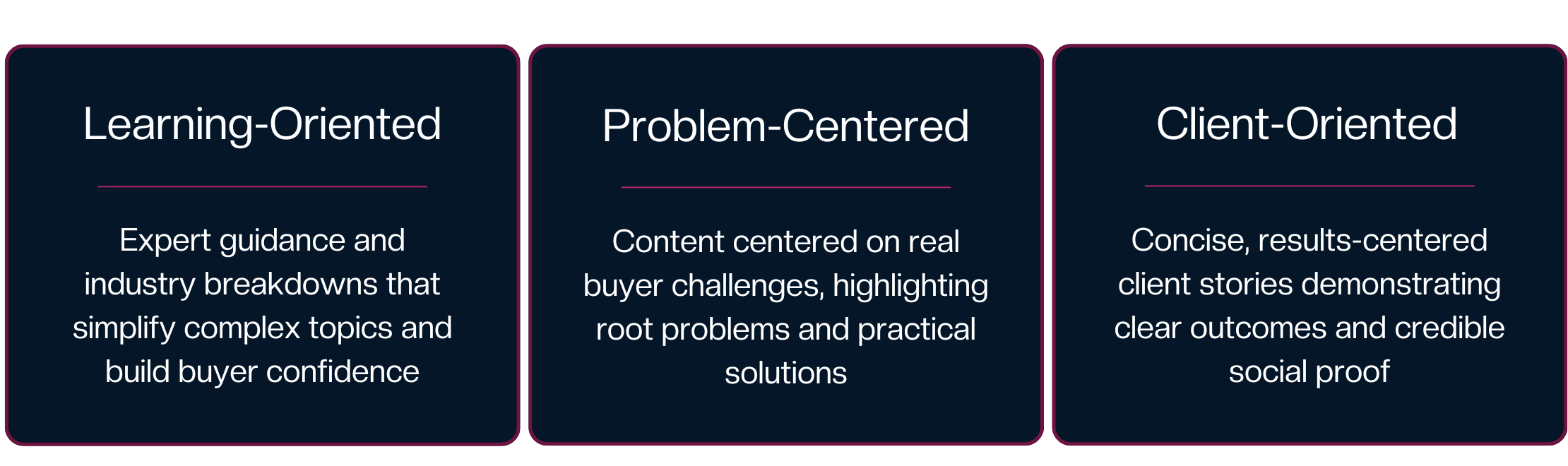
However, the “what” matters as much as the “how often.” The research highlights that not all content converts. While “I hit quota!” posts might get likes from colleagues, they don’t sell software. The content that drives revenue is:
- Educational: How-to guides and industry insights.
- Pain-Point Focused: Addressing specific problems the buyer faces.
- Customer-Centric: Sharing stories of how clients solved problems (social proof).
The Winning Strategy: A Multi-Channel Approach
To leverage personal LinkedIn content for outbound sales effectively, it must be integrated into a broader workflow. It is not about choosing between the phone and LinkedIn; it is about using them together.
Top performers use a “warm-up” strategy. Before sending a connection request or booking a meeting, they engage with the prospect’s content. A simple comment or reaction can put the rep on the prospect’s radar. When the direct message eventually lands, it feels like a continuation of a conversation rather than an intrusion.
Cognism’s outbound reports suggest a structured rhythm: open with a call, follow up with an email, and intersperse LinkedIn engagements over several days. This “surround sound” effect ensures that the prospect sees the rep as a credible expert in their ecosystem.
Conclusion
The era of “spray and pray” outreach is ending. In the competitive world of B2B SaaS, the most effective sales tool available to a representative is their own voice. The data proves that consistent, high-quality engagement on LinkedIn directly correlates with higher reply rates, more meetings booked, and a healthier pipeline.
By shifting focus from volume-based cold calling to value-based social selling, sales teams can build trust at scale. The reps who will win in the coming years are those who understand that personal LinkedIn content for outbound sales is not just a marketing task—it is a critical sales activity.