


In the high-stakes world of B2B SaaS, the difference between a closed deal and a missed opportunity often comes down to timing and relevance. For years, sales development representatives (SDRs) and account executives have been bogged down by the “grind”—manually sifting through LinkedIn, copy-pasting generic templates, and battling data decay. But the landscape has shifted dramatically.
Generative AI is no longer just a futuristic buzzword; it is a fundamental driver of modern revenue engines. Advanced models like Google’s Gemini 3.0 Pro, OpenAI’s ChatGPT 5.1, and Anthropic’s Claude have evolved into tireless co-pilots.
These tools are not replacing sales teams; they are supercharging them. According to recent Salesforce data, teams leveraging AI are 1.3× more likely to see a revenue jump, proving that AI-powered B2B sales prospecting is a tangible performance booster, not just hype.
Escaping the Admin Trap: Automating Sales Administrative Tasks
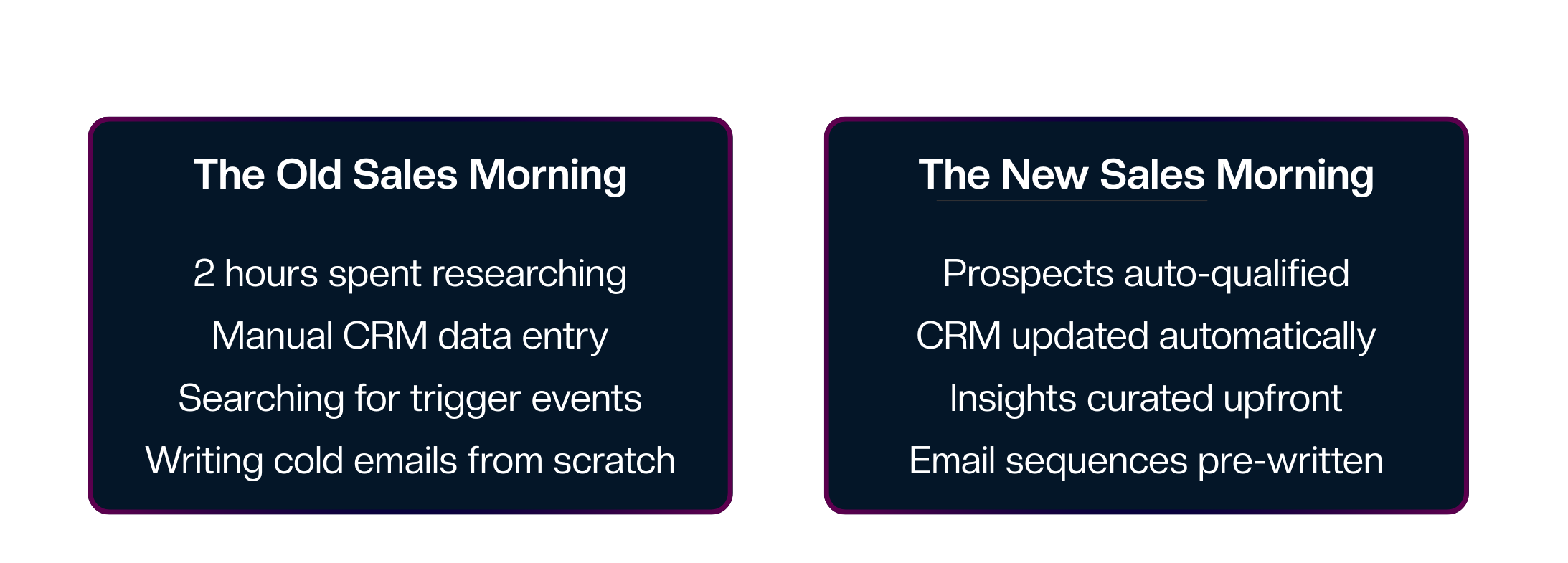
The traditional sales week is plagued by inefficiency. Estimates suggest that sales representatives spend up to 70% of their time on non-selling tasks, such as hunting for lead contact information, researching company backgrounds, and updating CRM records. This leaves a meager 30% for actual selling.
The new wave of AI copilots is flipping this ratio. By automating sales administrative tasks, tools powered by engines like Gemini and ChatGPT 5.1 can handle the heavy lifting of research end-to-end. Imagine a workflow where an AI engine kicks off at 8:00 AM, scanning over 150 sources for specific buying signals—such as Series B funding announcements, executive hires, or tech stack changes.
Instead of drowning in data entry, reps can start their day with a curated list of high-priority leads. By 8:30 AM, multichannel sequences are pre-loaded with AI-generated touchpoints, ready for a quick human review. The result? A reported 73% reduction in admin time, freeing up reps to spend nearly three times more hours in meaningful, revenue-generating conversations.
Moving Beyond the “Spray and Pray”: Personalizing Cold Emails at Scale
Historically, cold emailing has been a volume game with diminishing returns. Response rates typically hover in the dismal 1–5% range, largely because true personalization is time-prohibitive. You simply cannot hand-write a bespoke email for 100 prospects a day.
This is where personalizing cold emails at scale changes the equation. Models like ChatGPT 5.1 excel at generating natural, context-aware prose. They can instantly digest a prospect’s LinkedIn bio and recent company news to draft a message that feels hand-written.
For example, rather than a generic opening, the AI might write:
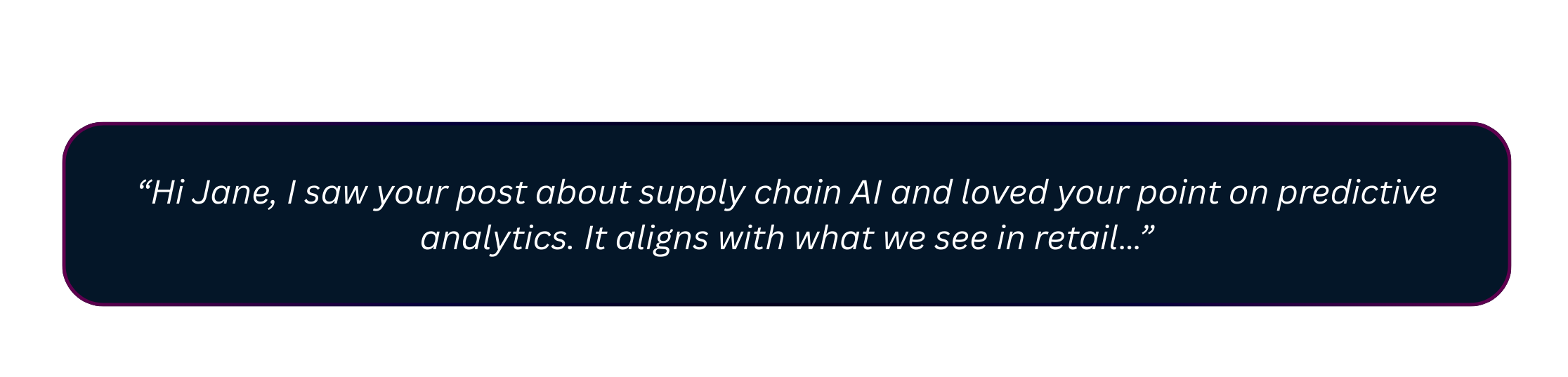
This approach shifts the tone from a transactional pitch to a relevant conversation starter. The metrics back this up: some sales teams utilizing AI-driven outbound systems have reported a 250% increase in response rates. When the outreach is hyper-customized—referencing specific pain points or blog posts—reply rates can jump by 5×.
The Multi-Channel Advantage: LinkedIn and Call Prep
The power of AI-powered B2B sales prospecting extends beyond the inbox. LinkedIn has become a goldmine for context, but mining it manually is slow. AI agents can now monitor job changes and social activity to trigger timely outreach. If a target decision-maker starts a new role—a prime buying signal—AI can draft a congratulatory note tied to a value proposition within minutes.
Furthermore, AI creates a cohesive experience across channels. If a prospect engages with a LinkedIn post but misses an email, AI tools can flag this and draft a follow-up InMail, ensuring no opportunity slips through the cracks.
This intelligence applies to voice channels as well. Before a cold call, models like Claude (with its massive context window) can summarize a company’s 10-K report or recent news in seconds. This allows reps to enter calls armed with a “cheat sheet” of likely pain points, transforming a cold call into a warm consultation. Post-call, AI transcription tools ensure that every objection and action item is logged, maintaining pristine data hygiene.
The Bottom Line: Efficiency Meets Effectiveness
The integration of these advanced AI models is driving a clear wedge between modern sales teams and those stuck in legacy workflows. The ROI is measurable and significant:
- Pipeline Velocity: With AI handling data verification (combatting the 90% annual data decay rate), reps focus only on valid, high-intent leads.
- Higher Engagement: Best-in-class campaigns integrating AI personalization have seen positive reply rates reach as high as 48%.
- Revenue Growth: The efficiency gains allow for higher volume without sacrificing quality, directly contributing to the bottom line.
Conclusion
The era of Gemini 3.0 Pro, ChatGPT 5.1, and Claude has ushered in a new standard for the sales industry. By handing over the grunt work to intelligent algorithms, sales professionals can reclaim their time and focus on what they do best: building relationships and closing deals.
Adopting AI-powered B2B sales prospecting is no longer just a competitive advantage; it is becoming a survival mechanism. Whether it is automating sales administrative tasks to save hours per week or personalizing cold emails at scale to triple response rates, the data is clear.
Sales teams that embrace this technology are seeing tangible performance gains, while those who rely solely on manual effort risk falling behind. The future of sales isn’t about robots replacing humans—it’s about humans extended by AI, working smarter, faster, and more effectively than ever before.